
How Resilient is ‘Existing Use’?
“an existing user is a hardy beast”

Whether or not a pre-existing use has been abandoned/extinguished may determine whether or not an application for planning permission is required. It is a question, however, which may involve complex law and evidence.
For how long can a structure with a permitted/established use be unoccupied before its use will be held to be abandoned? To what extent can its condition be allowed to deteriorate? What steps will be necessary (if any) upon the grant of a new permission before an old use will be considered extinguished? How relevant (if at all) are the intentions of the owner?
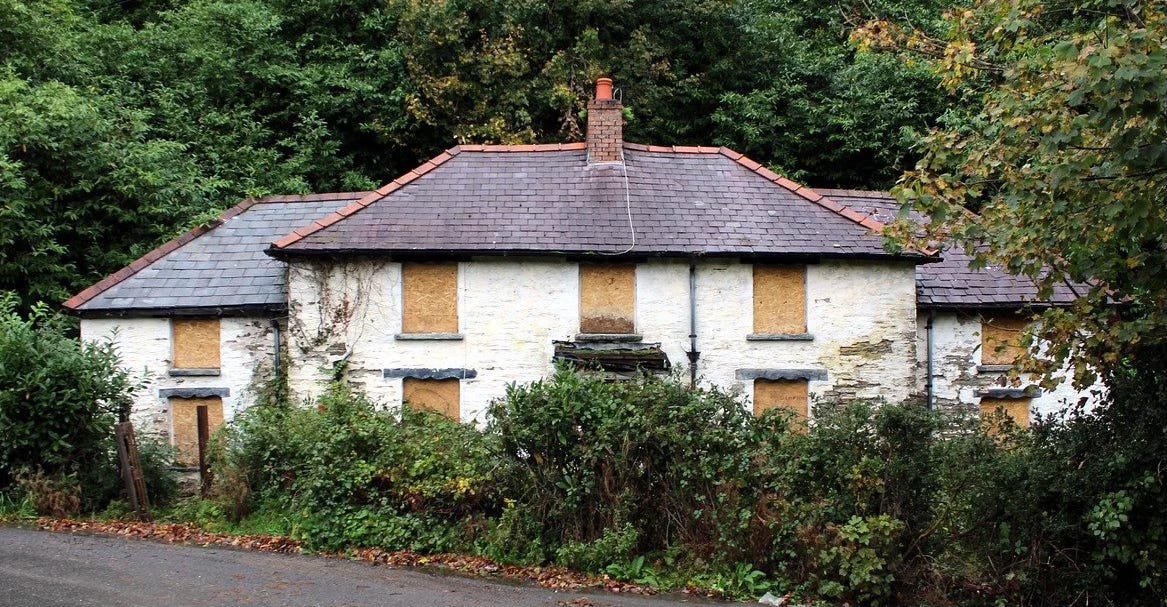
These questions most often arise in two scenarios in practice;
does the grant of a new (use) permission of itself establish a new use?
to what extent can a property remain unoccupied/deteriorate and retain its use?
The first scenario sometimes arises in a context where, for whatever reason, it is desired to adhere to the use prior to the grant of a new planning permission. The second scenario is more frequently encountered and arises where a party seeks to maintain what is said to be an established use of a half-derelict property that hasn’t been used for anything for years.
This second scenario has been considered by the High Court twice in the last five months in O’Murthuile v An Coimisiún Pleanála [2025] IEHC 498 (19 September) and [2026] IEHC 36 (3 February).
The Court dismissed an application for Judicial Review and then an application for leave to appeal against that dismissal. The judgments taken together provide a helpful survey of the factors relevant in assessing whether or not an existing use has been extinguished.
Unless otherwise stated, the quotations below are from Farrell J in the O’Murthuile judgments. I refer to paragraph numbers (§) prefixed either by “2025” or “2026” in order to identify the relevant judgment.
The entirety of this post is only available to paid subscribers.
THE FACTS
The Court was asked to quash the retention permission of An Coimisiún Pleanála of 5 December 2023 (315285) in respect of renovations and alterations to an existing dwelling at Townlough Upper, Portroe, a small village approximately 11km west of Nenagh, Co Tipperary, on the R494 road to Killaloe. The Applicant had appealed against a grant of similar permission by the planning authority.
The Inspector had made clear that the structure was in a poor state of repair.
“The roof appears to have been missing but no evidence was identified to support the contention that the walls were not substantially intact.” A 2006 Planning Report had referred to the structure as a “ruin” and found that “the proposed extension is...to a dwelling which is not substantially intact.” (2025 §29)
These cases are not uncommon.
“The Inspector considered that the building was a house and that as such, despite its poor state of repair, the use of the house did not require a planning application to re-establish residential use.” (2026 §32)
Amongst other grounds of challenge, the Applicant argued that the Board erred in law by approaching the application on the basis that there was a pre-existing and ongoing residential use. He argued that the Board should have approached the case as if the development concerned was new residential development (2025 §12). The question as to whether or not there was pre-existing and ongoing residential use was at the “core” of the case (2025 §27).
THE LAW
‘Use’
“Use is a term of art in the planning code. It is not just a snapshot of a current position...” (2025 §38)
Definition
The second statement is not merely a clarification of the first. These are separate statements. The first confirms that ‘use’ has a particular meaning in planning and planning law.
‘Use’ does not include works by and of themselves (Planning and Development Act 2024 “PDA 2024”, s2 and see Kildare County Council v Goode [1999] 2 IR 495, 498 and Roadstone Provinces Ltd v ABP [2008] IEHC 210 §26).
For planning purposes, all land has an existing use. The issue of ‘use’ usually arises when it is desired to use land differently from its existing use and the question arises as to whether such different use involves “the making of any material change in the use” of the land. If it does, the change of use will constitute development (s2 PDA 2024) and, unless it is exempt development, it will require planning permission (s32(1)(a) PDA 2000, s83(1/2) PDA 2024, when commenced)
An existing use will be interpreted flexibly. It has been referred to as “an envelope, not a strait-jacket” (Humphreys J, Leitrim CC v Dromaprop Ltd [2024] IEHC 233 §33).
Not a “Snapshot”
As will be clear from what follows, the established/permitted use of a structure cannot be reliably ascertained on the basis of what it is being used for (or not) at any one particular time. Use can only be ascertained by ‘watching the movie’, not a short video and certainly not a single frame...or a snapshot.
The Resilience of ‘Use’
“An existing user is a hardy beast” (Budd J, Westmeath CC v Quirke & Sons, Unreported, High Court, 23 May 1996, p125)
“The concept of “use” is not so delicate as to crumble with any mild change of tack or emphasis...” (Dromaprop§33)
“Abandonment is a definitive legal act with huge consequences in planning terms, it cannot be automatically inferred merely from non-user or disrepair.” (Humphreys J, Dromaprop, §32, emphasis added)
“Shuttering a property doesn’t preclude refurbishing or rebuilding it at a later stage. Even allowing a property to fall into disrepair doesn’t in itself and in the absence of an intent to abandon its use for legal purposes extinguish the use for planning purposes. Certainly, it does not establish a new use. The old use remains until something unequivocal happens by way of definitive abandonment in the legal sense of the use, surpassing mere neglect and non-operation.” (Humphreys J, Leitrim CC v Dromaprop Ltd [2024] IEHC 233 §30, quoted by Farrell J at 2025 §33)
Time Unused/Empty
“Use...includes a use that has not been abandoned even if it is not currently being operated.” (2025 §38)
“There is a difference in law between a use not being exercised and the abandonment of use...” (2026 §18)
“There is a fundamental distinction between cessation of a use in practice at a particular time and the formal abandonment of a use on a permanent basis, which in a situation like this would normally arise where planning permission for some inconsistent use or development was granted.” (Humphreys J, Clonres v ABP [2021] IEHC 303 §37, followed in Murphy v ABP [2024] IEHC 186)
“Even if...the house was uninhabited, it does not necessarily follow that residential use had been abandoned.” (2025 §28)
In Wicklow CC v Jessup and Smith [2011] IEHC 81, Edwards J held that in respect of residential use a much longer period of non-use will be required to justify the inference that the owner of a dwelling house intended to abandon, as opposed to suspend, the former use, than would be the case in respect of business premises (2026 §28).
Disrepair
“Disrepair is not proof of abandonment of use. It is a question of degree.” (2025 §31)
